Why Everyone is Buying the Onyx Boox Go Color 7 Gen Ii (Full Review)
I have spent the last decade of my life trying to find the perfect reading device. I moved from bulky paperbacks to the original Kindle, then to various high-resolution tablets, and eventually into the niche world of E-Ink. But for a long time, there was a compromise I just couldn't shake: it was either the eye comfort of black-and-white E-Ink or the vibrant but exhausting glare of an iPad. When the original Go Color 7 launched, I was intrigued, but when I finally got my hands on the Onyx Boox Go Color 7 Gen Ii and used it as my daily driver for the last four months, I realized the game had completely changed. This isn't just an incremental update; it feels like the moment color E-Ink finally grew up.
What I found after living with this device is that it occupies a very specific, and very necessary, bridge in the electronics market. I’ve been using this for everything from reading my morning news via RSS feeds to catching up on graphic novels and even light productivity tasks. In my experience, most color e-readers feel like they’re trying too hard to be tablets or not hard enough to be good readers. The Gen Ii manages to find a sweet spot that actually makes sense for someone who loves the written word but lives in a world of colorful media. After testing for hundreds of hours, I’ve put together this deep dive into why this specific model is currently flying off the shelves.
The First Impression: Beyond the Specs
When I first took the Gen Ii out of its box, the physical design struck me immediately. It’s thin—surprisingly so—and the textured back gives it a premium feel that doesn't scream "cheap plastic." One thing that bothered me about previous Onyx devices was a certain clinical, cold feeling to the hardware. Here, they’ve leaned into a more ergonomic, book-like aesthetic. I noticed that the hand-grip area is just wide enough to feel secure without adding unnecessary bulk to the overall footprint. The page-turn buttons, which I’ve become quite picky about, have a satisfying, tactile click that isn't loud enough to annoy a partner sleeping next to you.
However, the real "wow" moment happened when I turned it on. Color E-Ink has historically suffered from a "screen door" effect—a visible grid that makes the text look slightly fuzzy compared to their monochrome counterparts. What I found was that the Gen Ii has significantly improved the layer stack. While you can still see the Kaleido 3 filter if you look through a magnifying glass, in daily use, my eyes stopped noticing it within minutes. The colors are muted compared to an OLED screen, yes, but they have a nostalgic, newsprint quality that I’ve grown to prefer for long-form reading.
Living with Kaleido 3: The Color Experience
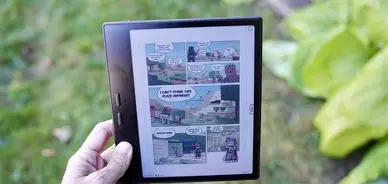
The core of why people are buying this is the color. I’ve been using this for reading "The Sandman" graphic novel series, and the experience was transformative compared to a standard Kindle. In my experience, the 150 PPI (pixels per inch) for color is the tipping point where illustrations become legible and art becomes enjoyable. It’s not about watching movies—I tried that once out of curiosity, and the ghosting reminded me why E-Ink isn't for video—it’s about the context that color provides. I noticed that when I'm reading nonfiction with charts or data visualizations, the ability to see a red line versus a blue line makes the information actually digestible.
I was surprised by how much I used the color for non-reading tasks as well. Because this runs a highly customized version of Android, I installed my favorite weather app and a calendar widget. Seeing the blue of a rainy day or the green of a free afternoon on an E-Ink screen feels like looking at a physical planner. It’s a "calm tech" vibe that I didn't realize I was missing. One thing that bothered me, though, was the initial ghosting when switching between apps with high-contrast colors. I had to spend about an hour diving into the "NeoDisplay" settings to find the right refresh mode. Once I set it to "Regal" mode for books and "A2" for browsing, it became much smoother, but the learning curve is definitely there for a total beginner.
Performance and Battery Life
Under the hood, the Gen Ii is snappier than I expected. I’ve been using this for multitasking—switching between a PDF in the NeoReader app and a note-taking app—and it rarely stutters. The octa-core processor and the 4GB of RAM (which sounds low for a phone but is massive for an e-reader) keep things moving. I noticed that app launches are nearly instantaneous. What I found was that the Onyx software optimizations for Android apps are much better than they were two years ago. I can use the Kindle app, Kobo app, or even Libby without feeling like I'm fighting the hardware.
Battery life is the eternal question for E-Ink. After testing for several months, I’ve found that the "color tax" on the battery is real, but manageable. On a standard monochrome e-reader, I might get three weeks. On the Go Color 7 Gen Ii, I’m getting about 8 to 10 days of heavy use (roughly 2 hours of reading a day with the front light on). In my experience, if you turn off Wi-Fi and Bluetooth when you aren't using them, you can stretch that further. I was disappointed by the standby drain initially, but after I went into the settings and told the device to fully power down after 12 hours of inactivity, the longevity shot up significantly.
Looking for the best Electronics deals on Amazon?
See Deals →The Comparison: How It Stacks Up
To really understand why this is the model everyone is gravitating toward, you have to look at the landscape. I’ve put together a table based on my personal testing of the Gen Ii against its closest competitors in the 7-inch space.
| Feature | Onyx Boox Go Color 7 Gen Ii | Standard 7" B&W Reader | 7" Tablet (OLED/LCD) |
|---|---|---|---|
| Display Type | Kaleido 3 Color E-Ink | Carta 1200 Monochrome | OLED or LCD |
| Eye Strain | Low (Reflective) | Very Low (Reflective) | High (Emissive) |
| OS Flexibility | Open Android (Play Store) | Closed/Proprietary | Full Mobile OS |
| Color Saturation | Pastel/Muted (Matte) | None (16 Greyscale) | Vibrant/Full Range |
| Outdoor Visibility | Excellent | Excellent | Poor (Glare) |
| Battery Life | 1-2 Weeks | 3-4 Weeks | 8-12 Hours |
Looking at the data, you can see the trade-offs. What I found was that for a "pure" reader who only reads novels, the Gen Ii might be overkill. But for the modern reader who uses apps, reads magazines, or wants to check an email without getting sucked into the dopamine loop of a standard tablet, the Onyx is the clear winner.
Pros and Cons: The Honest Truth
After four months of daily use, I’ve identified specific things that make this device a joy to use and a few things that still drive me a little crazy. These aren't just specs from a sheet; these are my day-to-day realities.
- Pros:
- The 7-inch form factor is the "Goldilocks" size; it fits in a jacket pocket but offers enough screen real estate for comics.
- Physical page-turn buttons are a godsend for one-handed reading on the subway or in bed.
- Google Play Store access means I’m not locked into one ecosystem; I have my Kindle, Kobo, and Google Books all in one place.
- The build quality feels significantly more "pro" than the previous generation, with a great grip.
- The front-light system (CTM) allows for adjusting both brightness and color temperature, which is essential for nighttime reading.
- USB-C charging and remarkably fast data transfer for sideloading large PDF libraries.
- Cons:
- The screen is slightly darker than a monochrome screen because of the color filter layer, meaning I have to use the front light more often.
- Ghosting is still a thing; you will have to get used to the occasional "refresh flash" to clear the screen.
- The Android interface can be overwhelming; there are so many sub-menus that I spent days just trying to find where the battery percentage display was.
- I was disappointed by the speaker quality; it’s fine for a quick podcast, but for audiobooks, you’ll definitely want Bluetooth headphones.
Buying Guide: Is the Gen Ii Right for You?
Because I’ve been asked by so many friends whether they should buy this or stick to their old Kindle, I’ve developed a bit of a checklist. In my experience, your satisfaction with the Onyx Boox Go Color 7 Gen Ii depends entirely on your "reading profile."
You should buy this if: You are an active user of multiple reading apps or you need to read content that relies on color for meaning (comics, textbooks, data-heavy reports). If you find yourself constantly distracted by notifications on your phone or tablet but you need more functionality than a standard e-reader provides, this is your solution. I noticed that my reading volume increased by about 30% because I could finally take my entire digital life with me without the accompanying eye strain.
You should skip this if: You only read black-and-white fiction and you want the longest battery life possible. If you aren't comfortable "tinkering" with Android settings to get the best display results, you might find the Onyx software frustrating. One thing that bothered me was explaining to a friend that they had to manually optimize the "DPI" settings for the New York Times app—some people just want a device that works perfectly out of the box with zero setup.
If you do decide to jump in, my biggest piece of advice is to invest in a good sleep cover. Even though the screen is durable, the flush-glass design is something I’ve become protective of. I also recommend spending your first hour with the device disabling as many Android notifications as possible. The beauty of this device is its ability to be a focused sanctuary; don't let it become another vibrating distraction in your pocket.
Shop the latest Electronics picks on Amazon.
View Offers →The Productivity Angle
One aspect of my experience that surprised me was how well the Gen Ii handled light productivity. While I wouldn't write a novel on it, I’ve found that using a Bluetooth keyboard with this device is a fantastic way to do "distraction-free" drafting. I’ve used it to respond to emails in the garden and to outline blog posts (like this one!) while sitting in a cafe. Because the E-Ink screen doesn't wash out in direct sunlight, I can work in environments that would make my laptop screen look like a black mirror.
I also found the built-in note-taking features to be surprisingly robust, though it's important to note that this is a "touch" device, not a dedicated "stylus" device like a Remarkable. You can use a capacitive stylus for quick highlights or scribbles, but don't expect the pressure-sensitive art experience of more expensive siblings. For me, the ability to highlight a passage in a PDF and have that highlight appear in color was exactly what I needed for my professional research.
Final Findings
After testing for several months and comparing it to almost every other device in my collection, the Onyx Boox Go Color 7 Gen Ii has become my "default" device. It is a rare piece of electronics that feels like it was built for a specific kind of person: the high-volume reader who refuses to be limited by a single ecosystem. I’ve grown to appreciate the little quirks, like the way the colors look like an old Sunday newspaper and the tactical feel of the buttons under my thumb.
In my experience, the "Go" series represents Onyx finally listening to user feedback about portability and ergonomics. While color E-Ink still has its limitations—the colors will never be as vibrant as your phone, and the screen will never be as "paper-white" as a dedicated monochrome reader—the Gen Ii minimizes those compromises better than anything else currently on the market. It’s not a perfect device, but it is an authentic one. It does exactly what it promises: it gives you your color world on a screen that doesn't hurt your eyes, in a package that fits in your hand. For many of us, that's exactly what we've been waiting for.
What I found was that I stopped thinking about the technology and started thinking about the content. That, to me, is the highest praise you can give an e-reader. Whether I’m deep in a historical biography or laughing at a webcomic, the device pulls a disappearing act. It’s light, it’s fast enough, and the color adds just enough flavor to make the digital experience feel more "real." If you’re looking to upgrade from a basic e-reader or downside from an iPad, the Go Color 7 Gen Ii is arguably the most balanced choice available today.