Which is Better Value? Ulefone Armor 29 Ultra vs Asus Proart P16 H7606Wx Laptop Compared
The modern professional landscape is increasingly divided between those who operate in controlled, climate-conditioned creative studios and those whose "office" might be a high-altitude construction site, a remote research station, or a rugged outdoor expedition. This divergence has birthed two distinct categories of high-performance mobile computing: the ultra-premium creative workstation and the rugged, multi-functional mobile powerhouse. In this comparison, we explore two devices that sit at the pinnacle of their respective worlds: the Asus Proart P16 H7606Wx Laptop and the Ulefone Armor 29 Ultra. While one is a traditional clamshell laptop and the other is a rugged smartphone with industrial-grade capabilities, they are frequently cross-shopped by field professionals, site managers, and creative directors who must decide where to allocate their hardware budget for maximum field utility.
Choosing between a top-tier laptop and a high-end rugged mobile device often comes down to the "mobile workflow" equation. For some, the necessity of a physical keyboard and a 16-inch color-accurate display outweighs all other factors. For others, the ability to have a device that survives a six-foot drop onto concrete, captures thermal imagery, and fits in a cargo pocket is the true definition of value. This article provides a deep dive into the specifications, real-world performance, and durability standards of both the Asus Proart P16 and the Ulefone Armor 29 Ultra to determine which offers better value for your specific professional needs.
Detailed Review: Asus Proart P16 H7606Wx Laptop
The Asus Proart P16 H7606Wx is not merely a laptop; it is a portable manifestation of a high-end desktop editing suite. Designed specifically for "Prosumers" and elite creative professionals—photographers, colorists, architects, and 3D animators—the P16 series represents the apex of Asus’s engineering for the creative class. The H7606Wx variant typically features the latest AMD Ryzen AI 9 HX 370 processor, paired with NVIDIA GeForce RTX 40-series graphics, making it a computational beast capable of handling 8K video scrubbing and complex CAD rendering without breaking a sweat.
The centerpiece of the Proart P16 is its 4K OLED touchscreen. With 100% DCI-P3 color gamut coverage and Pantone validation, it offers a level of visual fidelity that is essential for color-critical work. However, this beauty comes with a trade-off: vulnerability. While the chassis is built to MIL-STD 810H standards for vibration and temperature, the glass panel and the hinge mechanism remain sensitive points that would not fare well in a true industrial "drop" scenario. The inclusion of the Asus DialPad—a virtual rotary controller integrated into the touchpad—further emphasizes its role as a tool for precision rather than brute force.
In terms of connectivity, the P16 is generous, offering USB4, HDMI 2.1, and a dedicated SD Express 7.0 card reader. For a filmmaker in the field, the ability to offload high-bitrate footage directly into a workstation with this much thermal headroom is invaluable. It is a device meant for the basecamp, the studio, or the hotel room—a place where power is available and the environment is relatively stable.
Pros and Cons of the Asus Proart P16
- Pro: Unrivaled processing power with the AMD Ryzen AI 9 HX 370, perfect for heavy multitasking and local AI processing.
- Pro: Stunning 4K OLED display provides professional-grade color accuracy and deep blacks for visual content creation.
- Pro: Dedicated NVIDIA RTX 4070 GPU (or higher) enables hardware-accelerated rendering and high-end 3D modeling.
- Pro: Elegant, professional aesthetics with a surprisingly thin profile for a 16-inch workstation.
- Con: High price point puts it out of reach for many casual users or small business budgets.
- Con: Limited battery life when performing intensive tasks; requires a heavy power brick for sustained peak performance.
- Con: Despite military-grade testing, the OLED screen is susceptible to impact damage in rugged environments.
Detailed Review: Ulefone Armor 29 Ultra
The Ulefone Armor 29 Ultra represents a completely different philosophy of "performance." While the Asus focuses on CPU cycles and pixel counts, the Armor 29 Ultra focuses on environmental survivability and specialized utility. This is a rugged smartphone designed to replace not just a phone, but a thermal camera, a walkie-talkie, and a handheld GPS unit. It is built with a reinforced frame, shock-absorbing corners, and a sealed chassis that earns it IP68, IP69K, and MIL-STD-810H certifications.
What sets the 29 Ultra apart in the rugged market is its internal hardware. Unlike many rugged phones that use mid-range chips, the "Ultra" moniker here is backed by the MediaTek Dimensity 8200 5G chipset, providing enough liquid-cooled power to run complex mapping software, industrial AR applications, and even light video editing on the fly. More importantly, it features an integrated FLIR Lepton thermal imaging sensor and a 64MP night vision camera. For an electrical engineer or a search-and-rescue professional, these tools are often more valuable than the core processing power of a laptop.
Battery technology is another area where the Ulefone dominates. With a massive 10,800mAh battery, it can last for three to four days of moderate use, whereas the Asus laptop might struggle to see four hours under heavy load. The Armor 29 Ultra also supports satellite messaging (in specific configurations), ensuring that "value" remains high even when you are completely off the grid and away from Wi-Fi or cellular towers.
Pros and Cons of the Ulefone Armor 29 Ultra
- Pro: Exceptional durability; can withstand immersion in water, high-pressure steam, and drops onto hard surfaces.
- Pro: Integrated professional tools, including a FLIR thermal camera and IR night vision, saving the cost of dedicated equipment.
- Pro: Massive battery capacity with fast charging and wireless charging support for multi-day field expeditions.
- Pro: High-speed 5G connectivity and powerful Dimensity 8200 chipset ensure smooth performance for specialized industrial apps.
- Con: The 6.78-inch screen is far too small for detailed CAD work, video editing, or spreadsheet management.
- Con: Significant weight and bulk compared to standard smartphones; may be cumbersome for everyday pocket carry.
- Con: Android OS lacks the specialized desktop-class software (Adobe Creative Cloud, AutoCAD) found on Windows 11.
Head-to-Head Comparison Table
| Feature | Asus Proart P16 H7606Wx | Ulefone Armor 29 Ultra |
|---|---|---|
| Primary Use Case | High-end content creation, 3D rendering, video editing | Industrial field work, surveying, rugged expeditions |
| Operating System | Windows 11 Pro | Android 13 / 14 |
| Display | 16-inch 4K (3840 x 2400) OLED Touch | 6.78-inch FHD+ (2460 x 1080) 120Hz LCD |
| Processor | AMD Ryzen AI 9 HX 370 (12-core) | MediaTek Dimensity 8200 (Octa-core) |
| Graphics | NVIDIA GeForce RTX 4070 (8GB GDDR6) | Mali-G610 MC6 (Integrated) |
| Memory (RAM) | Up to 64GB LPDDR5X | 12GB LPDDR5 (Expandable via Virtual RAM) |
| Storage | Up to 4TB PCIe 4.0 SSD | 512GB UFS 3.1 (+ MicroSD up to 2TB) |
| Durability | MIL-STD-810H (Light) | IP68, IP69K, MIL-STD-810H (Hardened) |
| Special Features | Asus DialPad, SD Express 7.0, 6 Speaker System | FLIR Thermal Imaging, 64MP Night Vision, 10800mAh Battery |
| Weight | Approx. 1.85 kg (4.08 lbs) | Approx. 400g - 450g (0.9 to 1.0 lbs) |
Performance Analysis: Computational Power vs. Versatility
When analyzing "value," we must look at what each unit of currency buys in terms of productivity. The Asus Proart P16 is a top-heavy investment in computational throughput. If your work involves rendering a 3D scene in Blender or exporting a 4K timeline in Premiere Pro, the Asus provides a literal time-savings value. By finishing a task in 10 minutes that takes a lesser device 45 minutes, the laptop pays for itself through billable hours. The Ryzen AI 9 processor also includes a dedicated NPU (Neural Processing Unit), making it future-proof for the next generation of AI-driven creative tools, such as generative fill and automated transcription.
Find top-rated Laptops & Computers products at great prices.
View Offers →Conversely, the Ulefone Armor 29 Ultra provides value through situational utility. It is a Swiss Army knife. If you are an HVAC technician, the integrated FLIR thermal camera allows you to spot a leak or an overheating circuit immediately. Utilizing the laptop for this would require buying a separate FLIR USB dongle (costing several hundred dollars), which then adds a point of failure and bulk. The Ulefone’s value is represented by the "consolidation of gear." It replaces a phone, a rugged camera, a thermal scanner, and a GPS, all while being significantly cheaper than the Asus laptop.
For the user who needs both, the decision often comes down to the "Primary vs. Secondary" device hierarchy. If you already have a powerful desktop at home, the Ulefone might be the better value field companion. If you are a digital nomad who has no fixed office, the Asus Proart P16 is the non-negotiable choice, as it functions as your entire business infrastructure.
Real-World Use Cases
To understand the value proposition, consider three common personas who might evaluate these two devices:
The Field Architect
An architect visiting a construction site needs to review blueprints and occasionally make site-specific adjustments to a BIM (Building Information Modeling) file. The Asus Proart P16 allows them to open full Revit or ArchiCAD files and show the client a high-fidelity render on-site. However, the architect must be extremely careful with the laptop in the dust and debris. The Ulefone Armor 29 Ultra wouldn't be able to run the full CAD software, but it would allow the architect to take thermal photos of the insulation, document progress in the rain, and stay in touch with the team via 5G without fear of damaging the device. For this persona, the Asus is the better "work" tool, but the Ulefone is the better "site" tool.
The Wildlife Documentarian
While filming in the rainforest, the documentarian uses the Asus P16 back at the camp to offload huge amounts of data from CFexpress cards and perform "dailies" color grading. The P16's OLED screen is critical here to ensure the greens and earth tones are captured correctly. During the actual trek, however, they rely on the Ulefone Armor 29 Ultra. Its night vision allows them to navigate to the blind in the dark, and its GPS ensures they don't get lost. In this scenario, the "value" is split: the Asus is the creative engine, while the Ulefone is the survival and utility tool. If they could only choose one to take on a 10-mile hike, the Ulefone would win every time.
The Emergency Responder
For search and rescue operations, the Asus laptop might stay in the command vehicle to coordinate drone flights and map data. But for the personnel on the ground, the Ulefone Armor 29 Ultra is the vastly superior value. Its thermal imaging can detect heat signatures through light foliage, and its ruggedness means it can be dropped in a stream or banged against rocks without losing communication. The battery life is also a life-saving feature here, as they cannot stop to charge a laptop in the middle of a clearing operation.
Buying Guide: How to Choose
Determining "better value" is a subjective exercise based on your environment. Use the following criteria to guide your purchase decision:
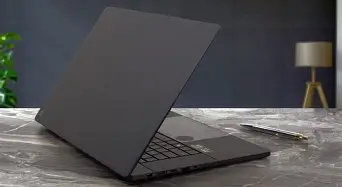
Choose the Asus Proart P16 H7606Wx if:
Your primary output is visual media, architectural designs, or complex data analysis. You require a full keyboard, a large screen for precision work, and the ability to run heavy Windows 11 software. You generally work in environments where you can sit at a table or desk, and you have access to power every few hours or carry a high-capacity power bank. You value color accuracy and processing speed above all else.
Looking for the best Laptops & Computers deals on Amazon?
View Offers →Choose the Ulefone Armor 29 Ultra if:
You work in "kinetic" environments where drops, spills, and extreme temperatures are part of the daily routine. You need specialized sensors (thermal/night vision) to perform your job and don't want to carry multiple devices. You require a device that can last several days without a charge and provides reliable 5G/GPS connectivity in remote areas. You primarily use mobile-friendly apps for communication, documentation, and basic data entry.

Consider a Hybrid Approach:
Many professionals find that the best "value" is actually a tiered hardware strategy. Buying a mid-range laptop for the office and the Ulefone Armor 29 Ultra for the field can sometimes cost less than a single top-spec Asus Proart P16. However, if your work demands the absolute best screen and CPU available in a mobile format, the Proart P16 is a standalone powerhouse that has very few equals in the current market.
The Impact of Specialized Features
We must briefly touch upon the "Extras" that these devices offer. The Asus DialPad is a game-changer for those who use Adobe Creative Cloud. Having the ability to change brush sizes in Photoshop or scrub the timeline in Premiere with a physical rotary movement (or the virtual haptic equivalent) changes the ergonomics of editing. It reduces the reliance on repetitive mouse clicks, which can have long-term health benefits for your wrists.
On the Ulefone side, the "Custom Key" is a feature often overlooked. It allows the user to map a physical button to specific functions—like the PTT (Push-to-Talk) for Zello, the flashlight, or the thermal camera. When you are wearing gloves or your hands are wet, a touchscreen is difficult to use. Having physical buttons that work regardless of the screen state is a massive "value" add for field technicians that a laptop simply cannot replicate.
Conclusion
The Asus Proart P16 H7606Wx and the Ulefone Armor 29 Ultra occupy different ends of the professional hardware spectrum. The Proart P16 is an investment in peak performance. It offers better value for the studio-based professional whose income depends on the speed and accuracy of their artistic output. Its high cost is justified by its ability to replace a desktop workstation, providing a seamless transition from the office to a client’s boardroom.
The Ulefone Armor 29 Ultra is an investment in operational resilience. It offers better value for the field-based professional who needs to perform specialized tasks in harsh conditions. For the price of a mid-range smartphone, it provides features (FLIR, Night Vision, Ruggedization) that would traditionally cost thousands of dollars in separate equipment. It is not a laptop replacement, but it is a formidable tool that ensures the "job" gets done, no matter where that job happens to be.
Ultimately, "better value" is found in the device that removes the most friction from your workday. If that friction is a slow render bar, go with the Asus. If that friction is a cracked screen or a dead battery in the middle of a forest, the Ulefone is the clear winner.